This is a follow-up to my previous post describing the surgery I had done on my right foot.
The Implant Backed Out
After my last update on January 15, 25 days after the first operation, I didn’t post any follow-ups. My foot got progressively better for several weeks. At about the 3-month mark, feeling satisfied and fairly confident with the result, I scheduled a follow-up with Dr. Gent to check on the implant and talk about getting the left side done. I pre-emptively scheduled the left side surgery for about a week after the follow-up. It’s a 5-hour round-trip ordeal to get from where I live/work out to Dr. Gent’s office in Bremerton and back, so I try to minimize the number of voyages I have to make out there.
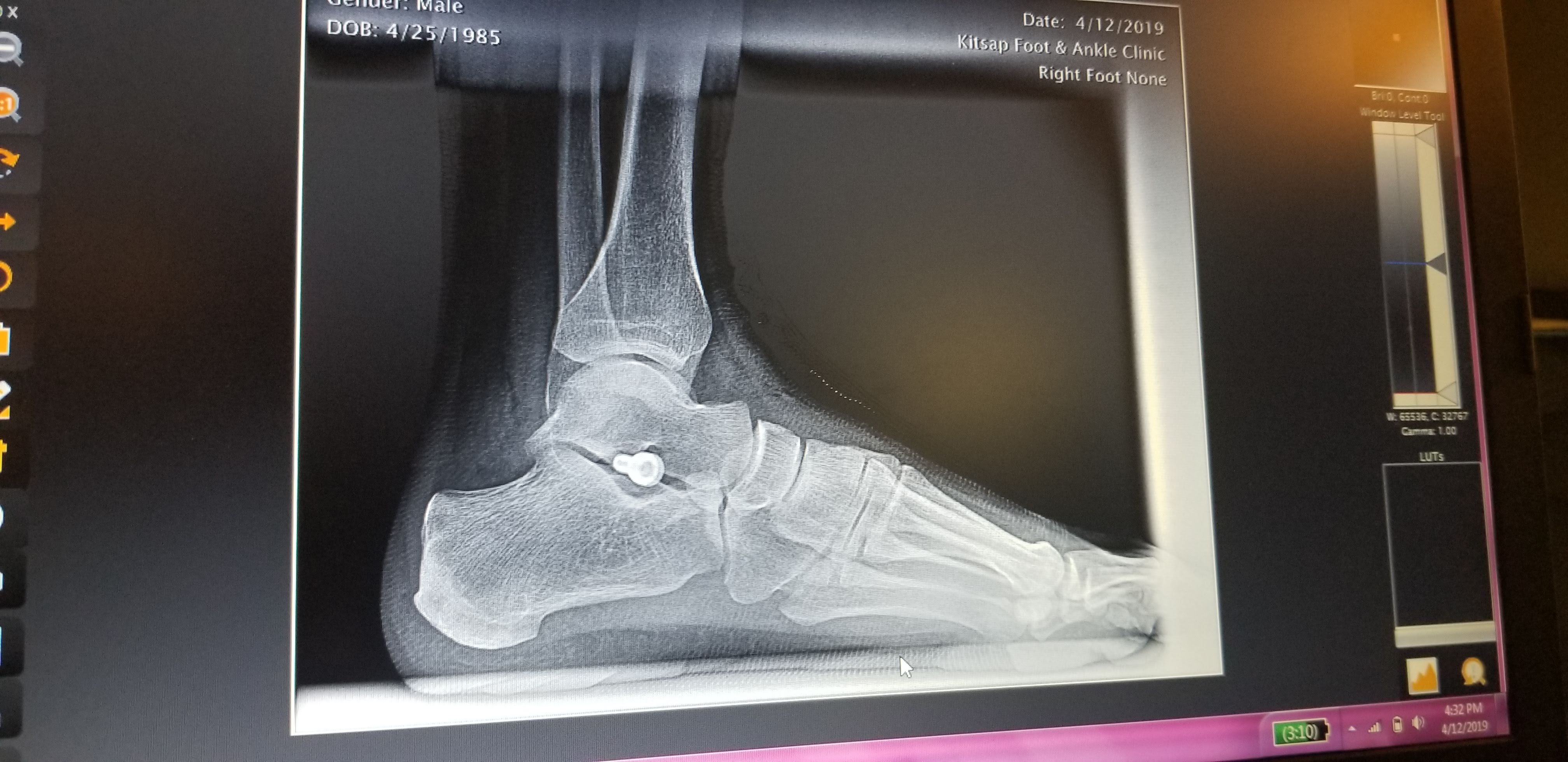
I went in on Tuesday, April 2nd, and had my right foot X-rayed. Unfortunately, the implant had backed out considerably since the day of the procedure.
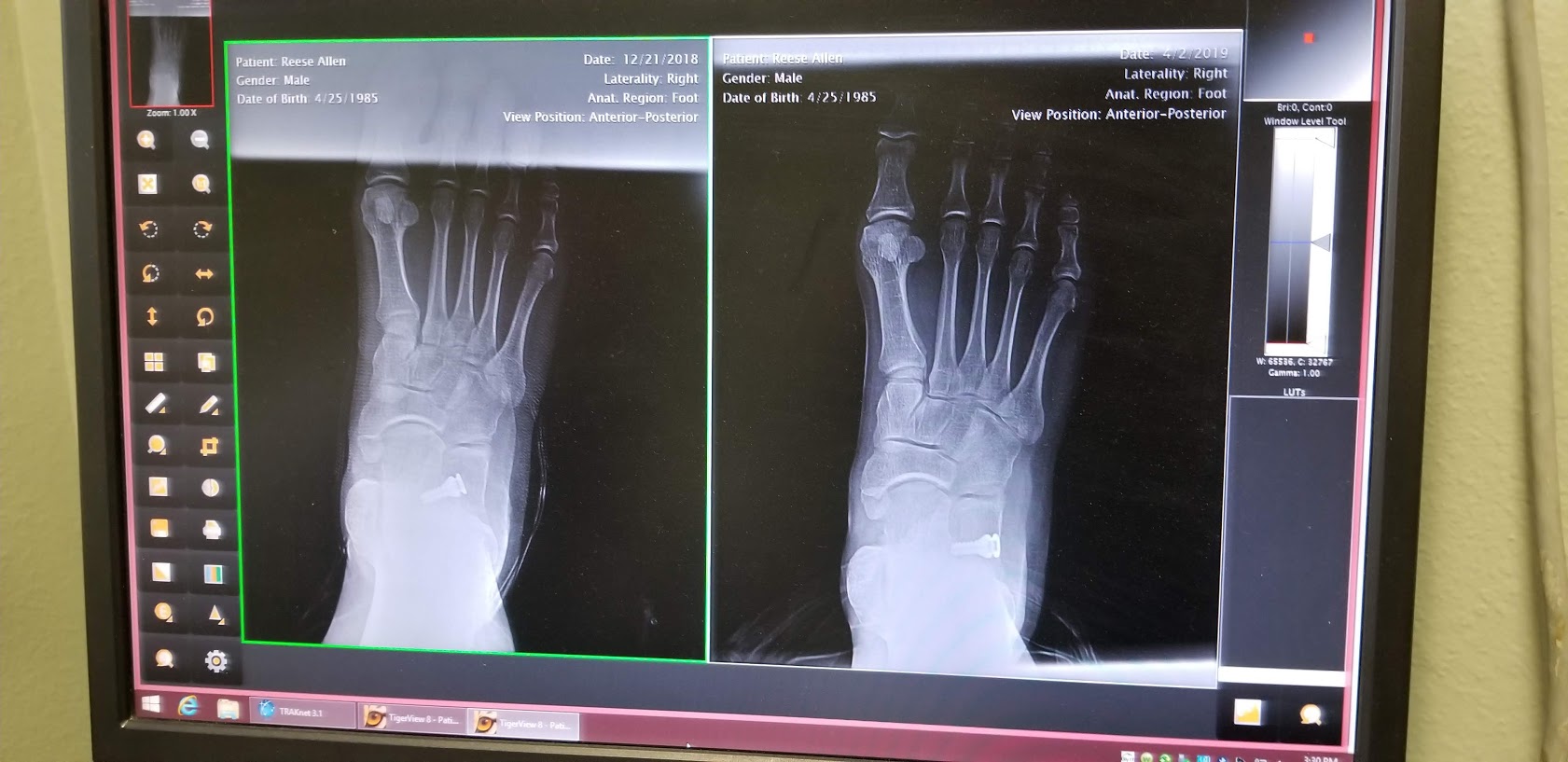
It was still in the joint far enough to be having a beneficial effect, but it was well out of place from where it needed to be to provide the best result. After some discussion we decided that it would be best to try to re-seat the implant properly, both so that it would be more effective and so that it would be less likely to back out even further and eventually become ineffective. The left foot surgery scheduled for the following week became a right foot re-do surgery on the same day, and we decided to delay the left foot surgery indefinitely until we see how the right goes.
Preparing for Right Foot Surgery, Attempt #2
Having a Hyprocure back out isn’t unheard of, and I found at least one self-reported incidence online where a patient had hers back out over the course of a couple of years. She had hers re-seated deeper (and on at least one side, went down a size) and years after that reported that she was happy with the results. In my case, many of my joints are hypermobile, which tends to complicate things.
I decided to be more cautious this time and try to avoid overtaxing the joint too early so that there would be less risk of causing the implant to back out again. I had previously been getting around on conventional crutches for the first couple of days after the surgery, then began walking on the foot as normally as possible as soon as possible after that. Partly this was because I was eager to get back on my feet and moving and getting stuff done, but also because I learned just how miserable it is to get around on crutches, especially when you live in a house with stairs, and I wanted to stop using them.
This time, I got ahold of a knee crutch which basically gives you a peg-leg to walk on without putting any weight on your foot. This is still a somewhat miserable way to get around, but it’s WAY better than conventional crutches as it can be used hands-free and it is fairly simple to get up and down stairs with it. I bought this one off of Amazon and have been satisfied with it. The night before the surgery I assembled it, fitted it to my leg, got the straps to a good level of tightness, and practiced walking around on it for 15 minutes to make sure I’d be able to get the hang of it.
Day of Surgery
The surgery went about the same as the first round. One major improvement was that upon the advice of my hand surgeon, Dr. Gent performed the nerve block/anesthetic injections more slowly, so although they were still very painful, it was not nearly as bad this time. You’d think that the best way to do it would be to get the injections over as quickly as possible, but counter-intuitively in some patients a faster injection is dramatically more painful and less tolerable than a slower injection that takes much longer.
To start things off, the doctor removed the implant entirely which gave me an opportunity to get some pictures of it before he put it back in.
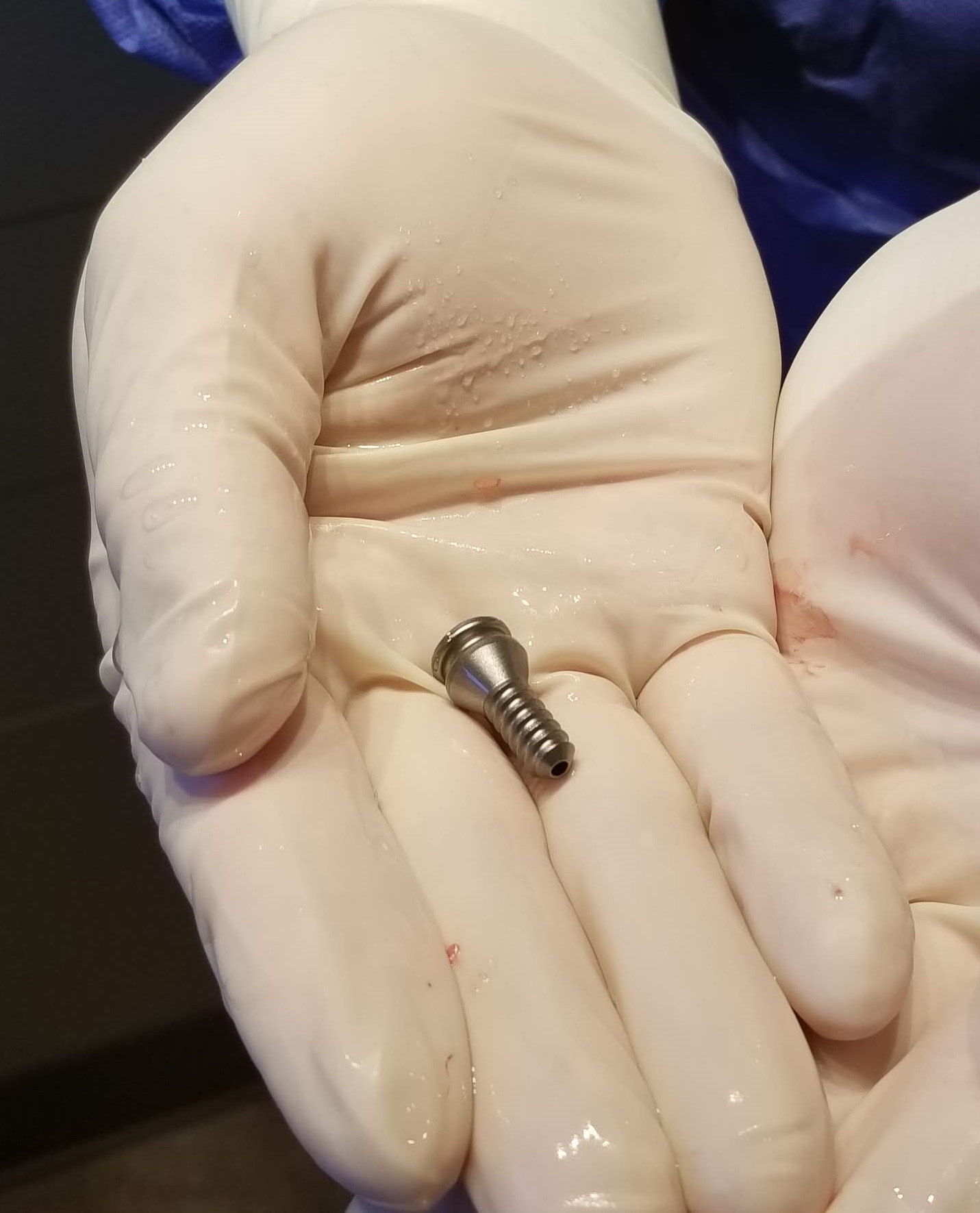
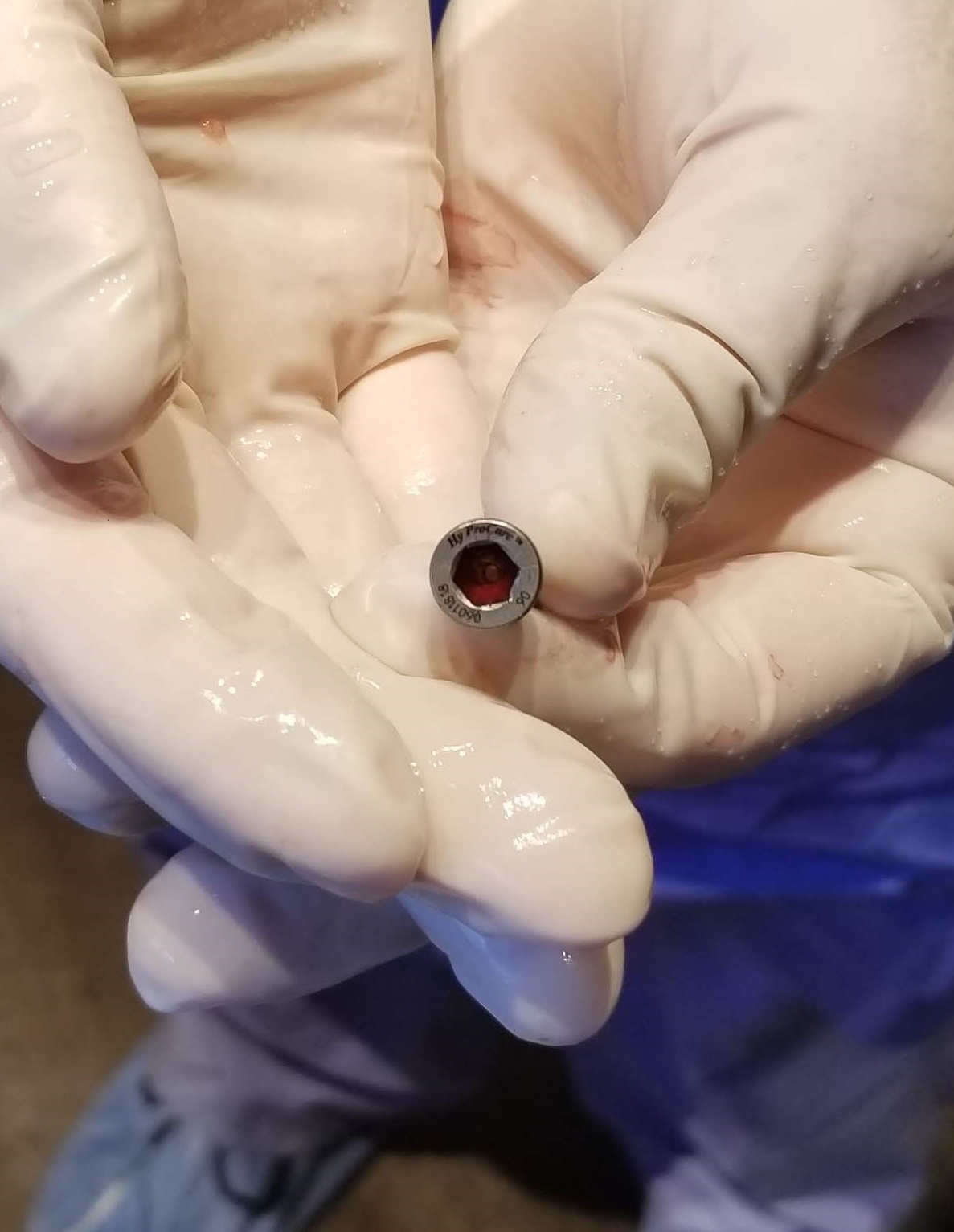
This time, the doctor did a bit more cutting and was then able to drive the implant deeper into the cavity between the talus and calcaneus bones. Preliminary X-rays showed good placement, so he stitched me back up. We then took X-rays with me standing on the freshly-repaired foot which clearly show that the implant is now much deeper than the first attempt from December.
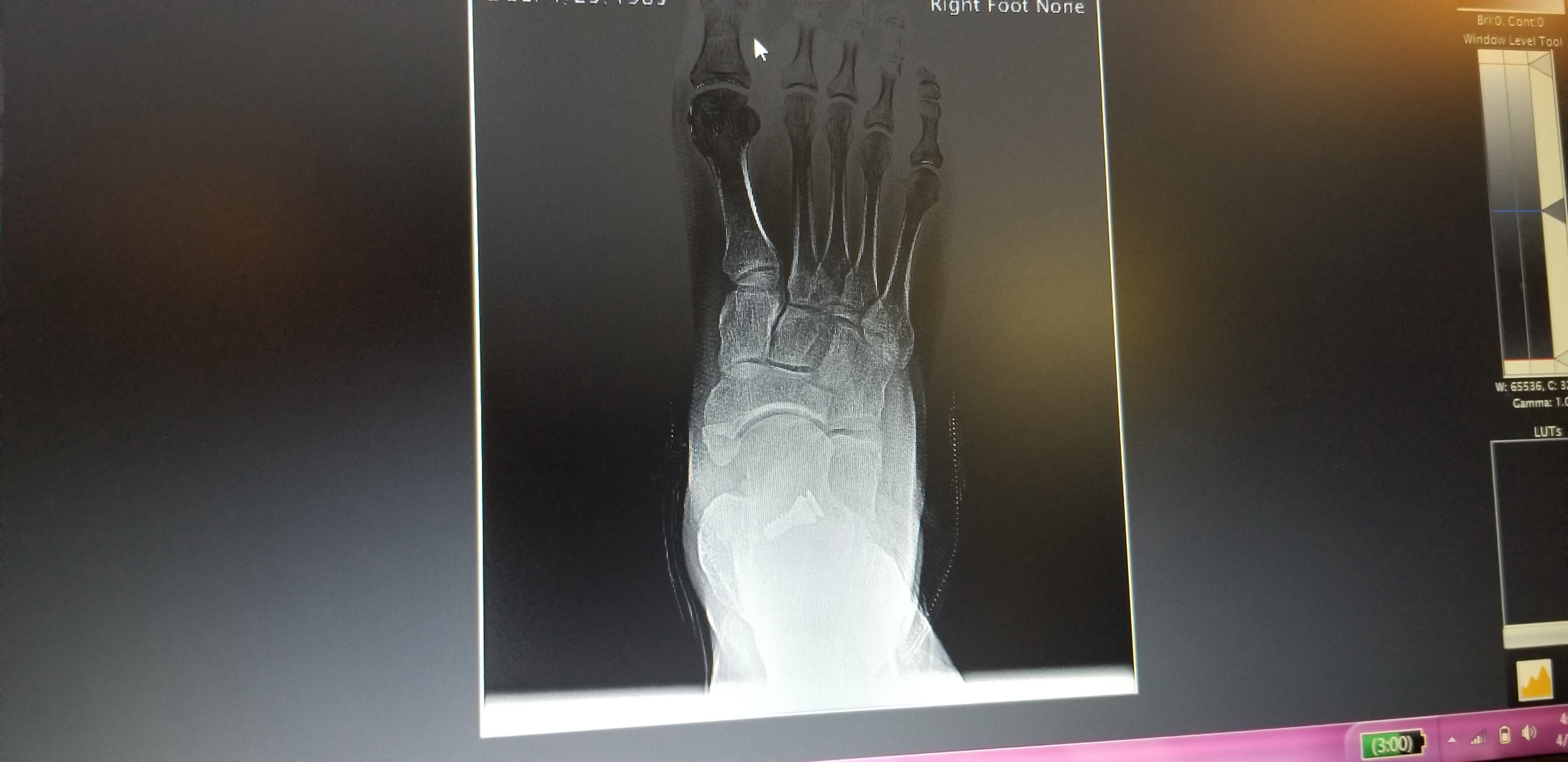
This time, I was given a prescription for antibiotics as well as the usual pain meds. The doctor also gave me a steroid injection to help with inflammation.
I strapped on my knee crutch and got home uneventfully.
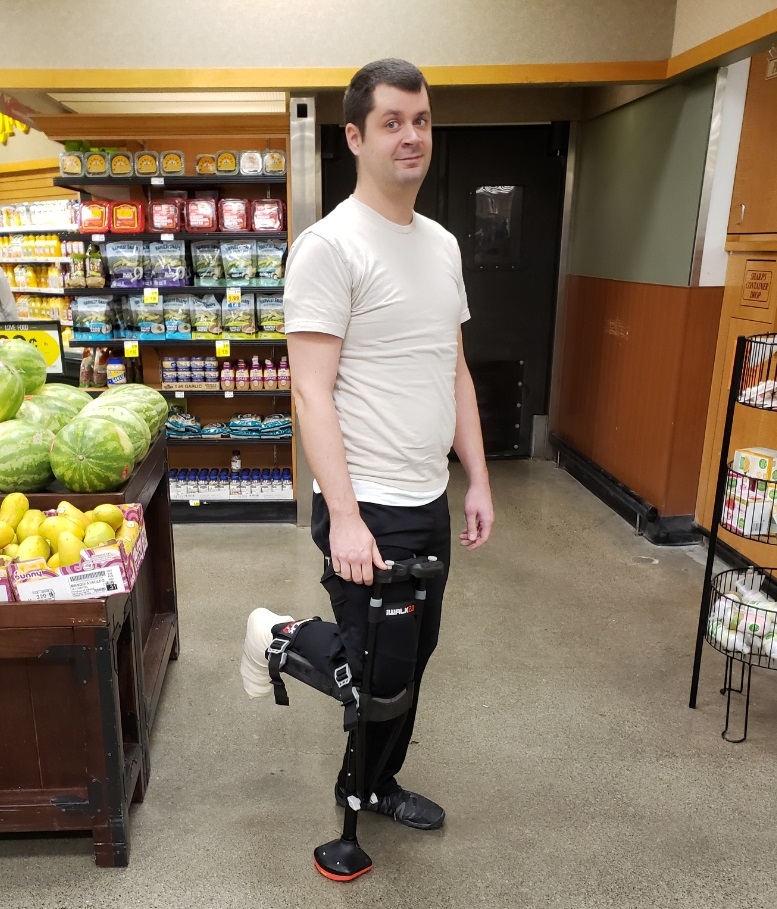
Day 1
The nerve block remained in effect for over 24 hours. By the end of the day I had regained some feeling but most of my foot remained numb all day. Since I had no feedback about how my foot was feeling, I decided to play it safe and did not put my full weight on my foot at any point all day. I mostly stayed on the couch with my foot propped up, and used the knee crutch any time I needed to get up and move around.
Day 2
I woke up to the same type of achy pain I had on the second day after my first surgery. Clearly the nerve block had finally worn off. I was able to limp around a bit without the crutch to help with bathing (again, bathtub with my leg hanging out of the side, not fun) and dressing but other than that, it’s been either couch or crutch all day.
I’ll report back later on how this goes. It seems like the recovery should be similar to last time, but hopefully will go more quickly since the joint is only being slightly tweaked from how it was before rather than the dramatic change of the first surgery.